


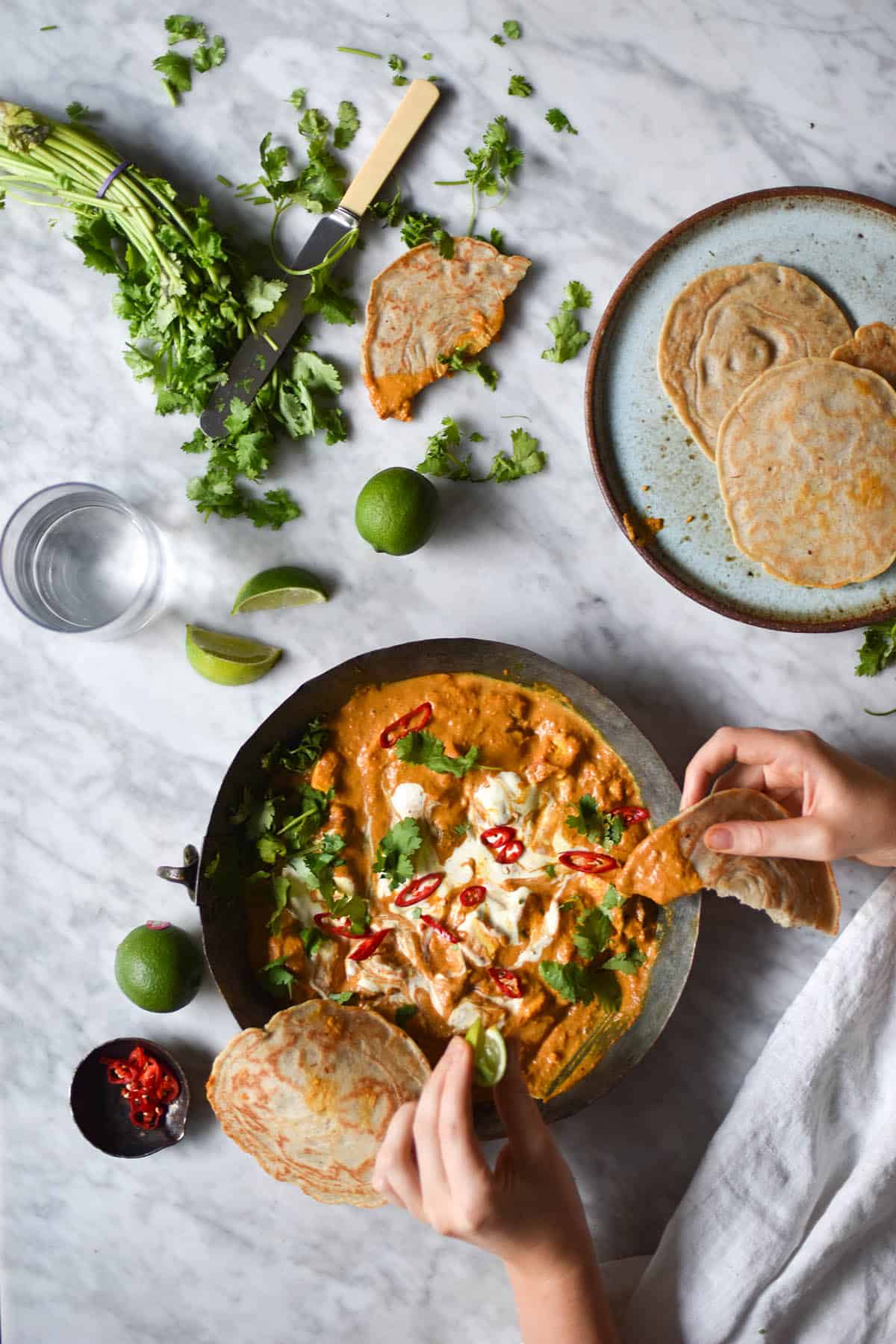
This FODMAP friendly shahi paneer was a crowning glory of my first cookbook. A dish that I used to order all the time, I was really proud to have nailed down my own version. Long story short, the version in the book contained onion which is not the version of this recipe I hoped to take to print. So, here we are today with the FODMAP friendly shahi paneer I intended to share. With a few tweaks, too, because I have learnt even more tricks since the book was published (and because Monash recently changed the threshold for tomatoes).
This shahi paneer is made without onion and garlic to make sure it is FODMAP friendly. It uses spring onion greens and asafoetida to replace the rich onion and garlic flavour. To keep the lactose content down, you can also make your own lactose free paneer. It’s a delicious and cost effective way to add paneer to your curry.
This dish is vegetarian and can be made vegan with a plant based milk/cream and tofu instead of the paneer.

How this recipe differs from traditional shahi paneer
- The onion and garlic are replaced with spring onion greens and the option to add asafoetida as well as pickled garlic
- Tomatoes have the option to be (half) replaced with grated carrot and pumpkin for sweetness and bulk
- I have omitted the nuts to ensure people with nut allergies and FODMAP concerns are included
- Cardamom doesn’t seem to be included in recipes online, but the shahi paneer I’ve always enjoyed had a hit of cardamom. I’m not sure if it’s an inauthentic addition or whether it’s more of a matter of choice
- There is the option to use plant based milk, yoghurt and tofu in place of the milk, cream and paneer
FODMAP notes
These FODMAP thresholds are current as of December 2025. They will be periodically reviewed to ensure they remain up to date with Monash research.
Common tomatoes are low FODMAP in serves of up to 74g per person. In 75g serves, they contain moderate amounts of fructose. This recipe was developed with 4 tomatoes and serves 4-6. Needless to say, I developed this recipe before Monash lowered the low FODMAP threshold for tomatoes.
We have options, though! Firstly, I have included the option to swap out some of the tomatoes for grated pumpkin. You can also use pumpkin puree if you have some on hand.
Although I haven’t tested this, you could replace the tomato with plain tinned tomato. Tinned Roma tomatoes are low FODMAP/fructose until they exceed servings of 182g per person. This makes them a much lower fructose option than fresh common tomatoes. You can also use my low FODMAP Nomato sauce to replace tinned tomatoes.
I use lactose free cream in this recipe. You can use regular cream if lactose is not an issue, or a dairy free alternative if that is what works for you. Needless to say, use a dairy free alternative to make this vegan.
Again, for lactose concerns, you can use cubed firm tofu instead of paneer. I quite like using tofu and paneer to add a bit of extra protein in. Firm tofu is low FODMAP in serves of up to 170g per person.

A note on the nuts
Nuts are used in curry bases to thicken and add creaminess. Needless to say, nuts aren’t for everyone,so I decided not to use them in this FODMAP friendly shahi paneer. If you’d like to add something to thicken it up a little, I have done a bit of digging as to some nut substitutes. Some suggestions I have found are:
- Chickpeas (use canned for FODMAP purposes) for that bland creaminess and thickening
- A little tiny bit of cornstarch to thicken the gravy up
- Add a little less liquid or compensate with cream. Thick cream would be good, if you don’t have any lactose concerns
- Tomato paste
More low FODMAP vegetarian recipes
- The tikka masala inspired FODMAP friendly curry
- Vegetarian Thai Green curry and Pad Thai
- FODMAP friendly daal (or not quite daal)
- Vegetarian chilli sin carne
- My old favourite, the vegan, FODMAP friendly bolognese
To make the accompanying gluten free flatbreads, follow this link here and enjoy!

FODMAP Friendly shahi paneer
Ingredients
For the shahi paneer:
- 200-400 g paneer cubed (see notes)
- 200-400 g firm tofu cubed (optional, see notes)
- 60ml (3 tablespoons)* neutral flavoured oil I used vegetable
- 50g (1 bunch) of spring onion greens chopped
- Greens of 1 leek thoroughly washed and finely chopped (optional, see notes)
- 1 bunch of coriander roots thoroughly washed and chopped (optional, see notes)
- 150 g 1 medium/large carrot, grated
- 4 common tomatoes OR 2 common tomatoes and 150g grated Kent pumpkin see notes
- 20ml (1 tablespoon)* neutral oil
- 50 g ginger grated
- 1-2 green chillies de-seeded and chopped (see notes)
- 1 tablespoon + 1 teaspoon coriander powder
- 1/2 teaspoon turmeric powder
- 15-20 cardamom pods crushed, husks discarded, seeds reserved
- 2-3 teaspoons garam masala
- 250ml (1 cup)* milk of choice (I used full cream lactose free)
- 250ml (1 cup)* lactose free cream
- Seasoning to taste
- Juice of up to 1 lime to taste
To serve:
- Remaining 50g cream from a 300g/ml tub
- Coriander
- 1 red chilli very finely chopped (optional)
Instructions
- In a dry pan over a medium high heat, dry fry the paneer and/or tofu cubes until golden.
- Heat the oil in a large skillet over a medium heat. Once warmed, add the spring onions and optional leeks and coriander roots. Cook for 3-4 minutes or until softened and fragrant, then add the carrot and tomatoes (as well as the pumpkin if you are using it).
- Cook until completely soft, about 10-15 minutes. Once it is, transfer the mixture to a blender with a steam valve. Blend until smooth, about 3 minutes. If you are using a Nutribullet or anything with a hole for steam to escape, wait until the mixture is cool. The pressure will be too much and you might explode the blender and hurt yourself. Once silky smooth, set aside.
- Combine the ginger, chilli and spices in a small food processor until smooth. You can also use a mortar and pestle. You might need to add a little water to make a paste consistency.
- Add a tablespoon extra oil to the (currently empty) skillet and add the ginger spice paste. Cook for a minute or so until fragrant, then add the blended vegetables back into the skillet. Stir thoroughly to combine and cook for a few minutes.
- Add the milk and cream and stir to combine. Season to taste and adjust for anything you think is missing. Add the lime juice to taste. Finally, add the paneer and/or tofu cubes to the pan and cook for a few minutes until they are heated through. Serve with a drizzle of cream (tubs are generally 300ml in Australia, so you will have 50g left) some finely sliced red chilli and the remaining coriander. Goes very well with the gluten free flatbread linked in the body of the post.
Notes
- You can use as little or as much paneer as you would like. If you’d like to keep make this vegan or keep the lactose down, use tofu or half paneer and half tofu.
- Leek greens add another layer of onion flavour to this dish. They’re often really dirty, so give them a good wash before use and slice them finely. They are optional.
- If you are topping your dish with coriander, chop the roots and add them in with the spring onions. They add another layer of flavour.
- Monash updated common tomatoes as being higher in fructose than they were previously since I developed this recipe. If you have no issues with tomatoes, use 4 tomatoes. If tomatoes don’t work for you, use 2 tomatoes, 150g of grated Kent pumpkin and some extra lime juice. See the body of the post for more information.
- Add chilli to your taste. If you prefer more spice, add 2 chillies.
This looks amazing and I can’t wait to try it. Thanks for providing it.