

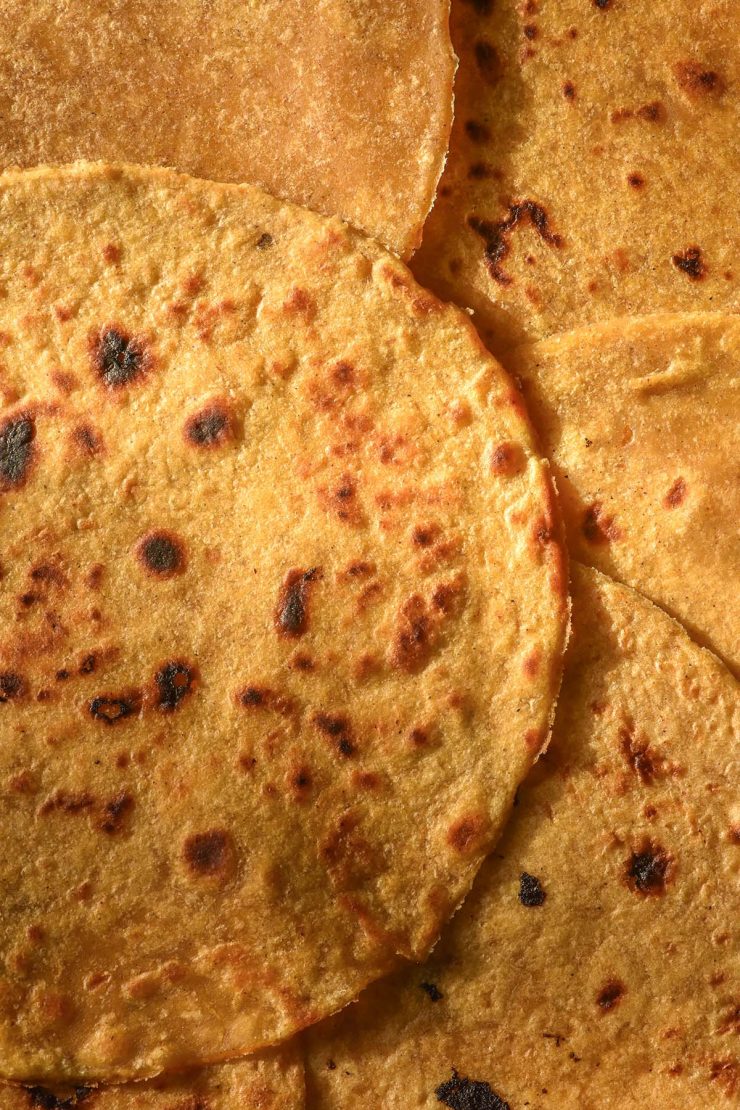
As you may have noticed if you follow my Instagram, I am a fiend for a wrap recipe. My beloved buckwheat wrap recipe spawned into a whole host of wrap recipes – cassava flour tortillas, oat flour wraps, quinoa flour wraps and more. After getting into making sweet potato puree recently, I decided I wanted to try my hand at sweet potato tortillas.
These sweet potato tortillas are gluten free, nut free, xanthan gum free and egg free. They use butter which can easily be vegan, meaning that the tortillas are also easily dairy free/vegan. They are a fun way to sneak a bit of colour and fibre into your tortillas.
The tortillas use fine white rice flour as the flour component along with a small amount of tapioca flour. Only 25g of tapioca gives the tortillas extra flexibility even when they are cooled and served the next day. Speaking of flexibility, psyllium husk powder brings the dough together and creates lovely flexible tortillas.
Of course, sweet potato puree adds flavour, colour and moisture. Butter and a small amount of oil contribute fat and flavour, allowing the tortillas to remain flexible but also allowing them to get char spots (aka: extra flavour) as they cook.
Boiling water is our tortilla hero here – it scalds the flour to make a juicy and elastic dough. This means that the tortillas are easy to roll out and cook, but they also remain flexible afterwards. This is an easy and fun recipe that has been added straight into my regular rotation.
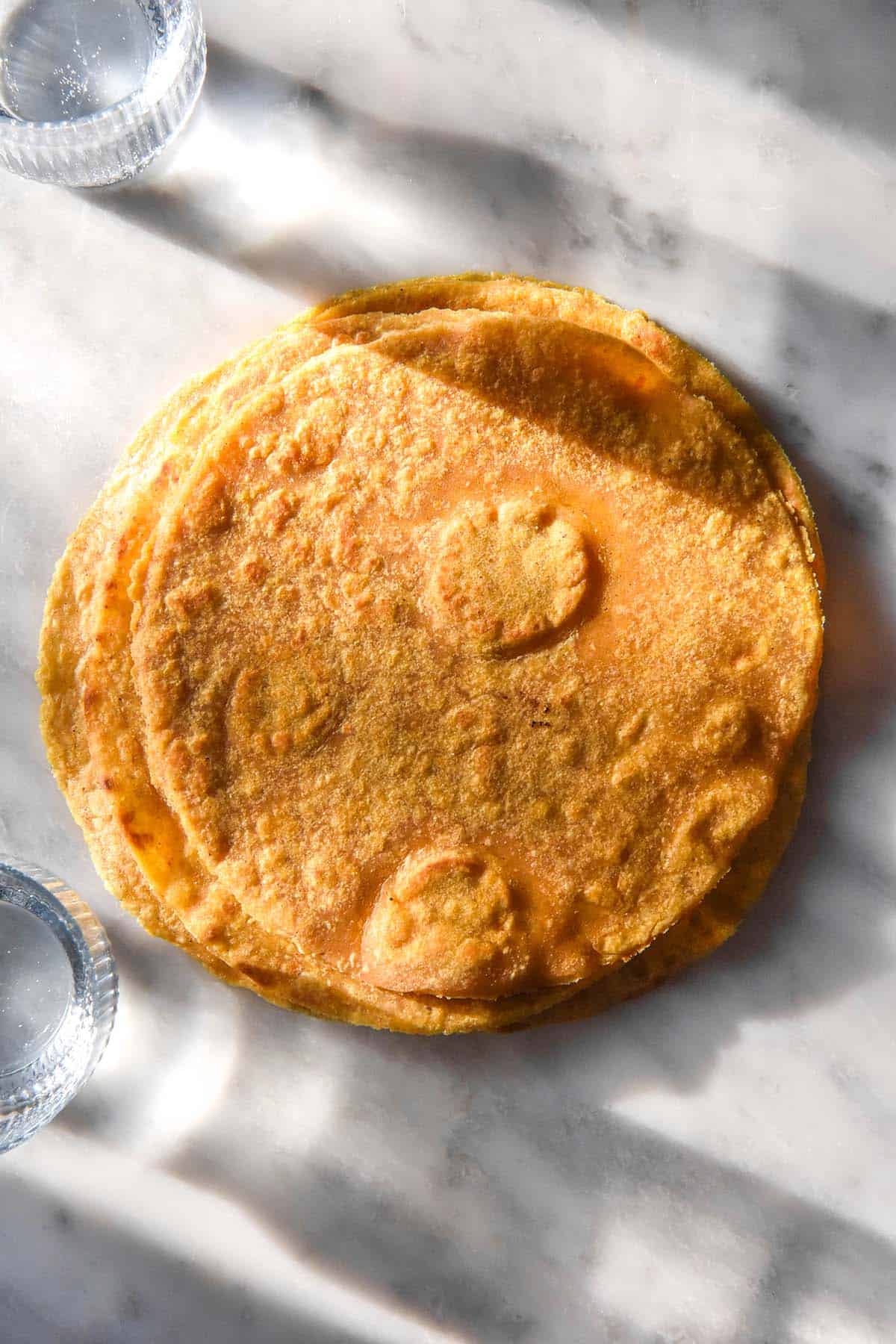
Ingredient notes
- I have only tested homemade sweet potato puree in this recipe. This is the only variety I have access to in Australia – there is no canned option widely available.
- If you do use canned sweet potato puree, ensure it has no ingredients other than sweet potato. Sugar, syrup or any other ingredients will not work here.
- When pouring the boiling water over the mixture, push the sweet potato right to the side. Scalding the flour is hugely important because it develops elasticity and allows you to add more water than you could ordinarily. Both of these things are key for flexible moist tortillas.
- Regular butter or a good quality vegan butter both work here. Add the boiling water in increments to account for any discrepancies in water content.
- I haven’t tested any alternative flours in this recipe. You are welcome to try, but you will need to experiment with hydration. With that said, I find lots of gluten free flours work in this style of wrap recipe.
- These wraps do work without the tapioca flour, but I find they stale and snap much more quickly.
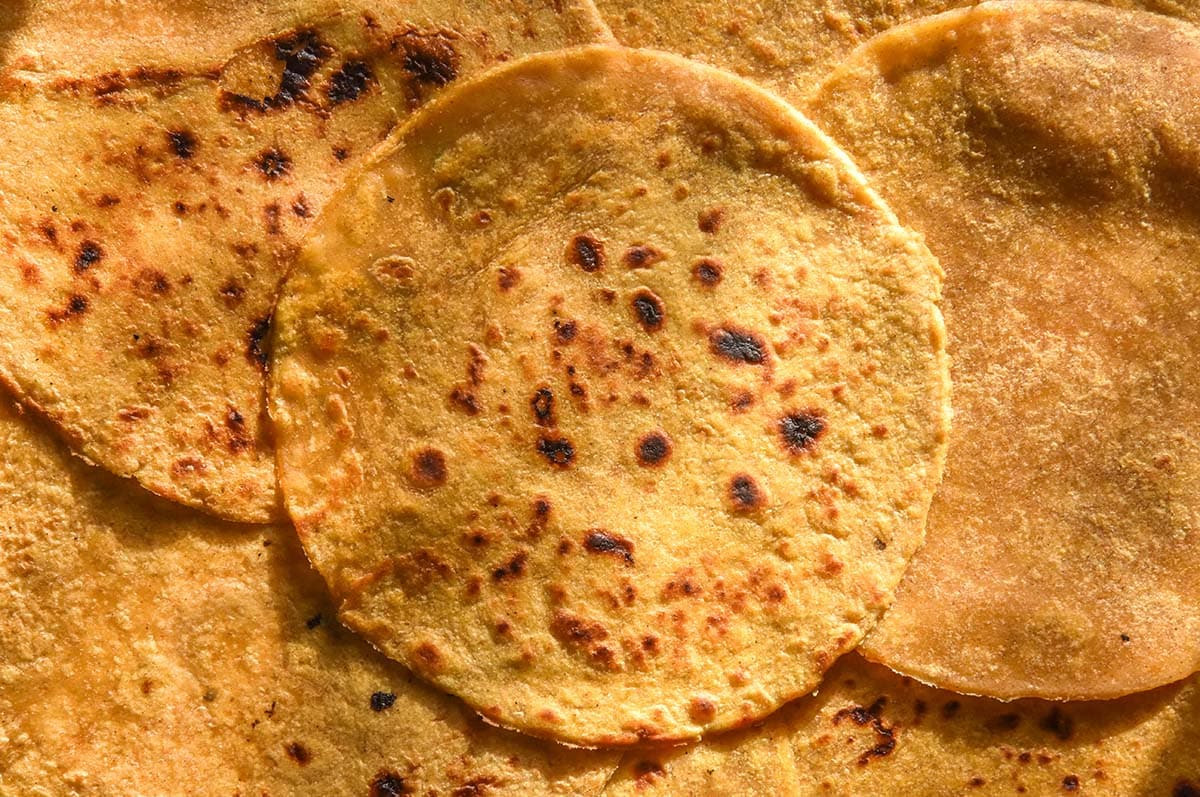
Tips for rolling out your sweet potato tortillas
I have to be a bit firm when I say that you absolutely must roll this dough very finely. A thick and hastily rolled dough will lack flexibility and will not taste as good. This is a tortilla, not a flatbread! The dough has flexibility and with some flour on the bench it is easy to roll thinly. Your ideal dough width prior to cutting should be 3-5mm and no larger. A thick tortilla snaps instead of bending and will taste more pasty.
I also highly recommend cutting out circular wrap shapes. These gives the tortillas a nice appearance, makes them easier to cook (as they fit neatly in the pan) and makes them more flexible in the end. Tortillas with ragged edges tend to cook faster in the ragged spots which makes the tortilla less flexible around the outer edges.
I use the lip of a large sharp bowl or (more commonly) the ring from a springform container. A large inverted bowl or cake tin with a sharp lid works perfectly – simply press down firmly and twist just slightly. From there, peel away the outer edge of dough and add it to your next ball of dough to re-roll it.
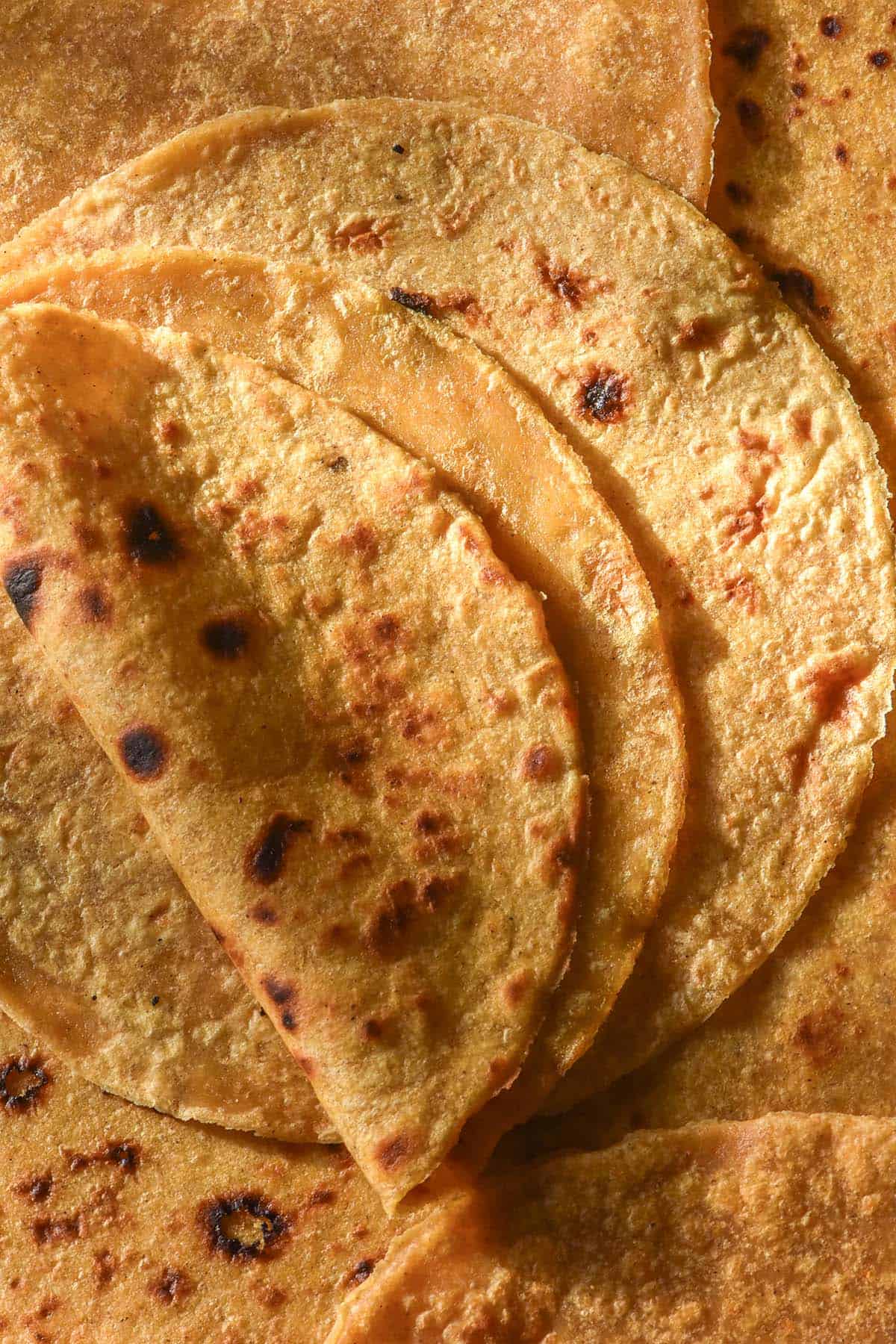
More gluten free bread recipes
- Gluten free focaccia without xanthan gum
- Gluten free bagels without xanthan gum (and a pumpkin version)
- Gluten free sourdough bread without xanthan gum
- Gluten free pizza bases without xanthan gum
- Gluten free pumpernickel bread without xanthan gum
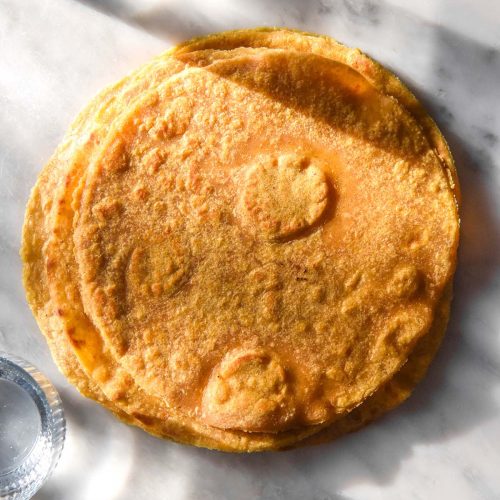
Sweet potato tortillas (gluten free)
Equipment
- 25cm (10 inch) bowl lip or springform pan ring, for cutting out the tortillas
Ingredients
- 325 g fine white rice flour
- 25 g tapioca flour/starch
- 25 g psyllium husk powder
- 10 g fine salt I use table salt
- 50 g butter cut into small cubes (salted or unsalted and regular or vegan)
- 10 ml (2 teaspoons) oil of choice (I use olive)
- 200 g sweet potato puree I use homemade, see notes
- 150-250 g boiling water added incrementally
Instructions
- Whisk together the dry ingredients in a medium/large mixing bowl. Stir through the cubed butter just to distribute and drizzle in the oil.
- Add the sweet potato puree to the bowl but keep it in a small spot to the side of the bowl.
- Pour 150g of the boiling water over the flour, not the sweet potato. We want to scald the flour which creates elasticity and allows the dough to absorb more water than it otherwise would.
- Stir everything together (sweet potato puree included) then get your hands into the bowl and squelch the dough through your fingers. The butter should melt in as you work. Your ideal consistency is a light orange dough that is juicy, moist and elastic feeling with no flour in the bowl and no crumbly texture. You should easily be able to pick it up and shape it into a ball, but it should not feel even a tiny bit dry. Add the water in increments until you reach this consistency.
- Divide the dough into 6 large balls and keep the remainder covered (I place them on the bench and invert the mixing bowl over the top).
- Flour a clean bench space lightly but thoroughly with tapioca flour.
- Take the first ball and place it on the floured work surface. Use a rolling pin to roll it out to a little larger than your 25cm (10 inch) bowl lip or springform pan ring. This will be your cutter to cut each tortilla out.
- Take your time to roll the dough to an approximate 3-5mm width – it should be very thin. A chunky and thick tortilla will not bend nicely and won't taste as good. Take the time to do it right – I promise the results are worth it and I promise the dough can easily be rolled this thin. If yours can't and feels too stiff, dry or fragile, stop and add more boiling water, taking care to knead it in thoroughly. Dough that is too dry feels hard to work with but properly hydrated dough is nice and flexible.
- Use the cutter to cut the tortilla. Pull off the dough around the edges or use a knife if it is not cut clean off the tortilla. Repeat with the remaining dough and tortillas, incorporating the scraps into another ball of dough as you work. You should might get 7-8 tortillas with this volume of dough.
- Thoroughly preheat a large skillet over a medium heat. The skillet really needs to be larger than the circumference of the tortillas so that it can lie flat as it cooks. This allows the edges to cook evenly with the centre of the tortilla.
- Once the skillet is thoroughly heated add a scant amount of oil. Place the first tortilla down. Give the top of the tortilla a little drizzle of oil and brush it evenly across the tortilla with a pastry brush.
- Cook the tortilla for a couple of minutes, depending on how high your heat is. Flip the tortilla and cook for half the time on the second side. We don't want to overcook the tortilla as it can easily become too dry and stiff, so don't leave it for too long on the second side. I like to aim for a tortilla with golden spots but only just cooked through, so adjust your heat as necessary.
- If your tortilla gets stuck, stop and allow the pan to heat for longer before continuing.
- Transfer each tortilla to a clean dry tea towel and keep them covered as you work. The steam helps keep them supple and flexible. Repeat with the remaining tortillas.
- Allow the tortillas to cool completely before transferring them to an airtight container or the freezer. I like to put a sheet of baking paper between each tortilla and freeze them. This way I can use one at a time and they don’t get stuck together after freezing.
- After a few days in the fridge, you can soften the tortillas by microwaving or steam heating them before use.
Notes
- I make my own sweet potato puree (in the microwave). If you intend to use canned sweet potato, it should only contain 1 ingredient – sweet potato.
- See notes in the body of the post in regards to ingredients and tips.
- I haven’t tried this recipe in a tortilla press yet.
No Comments