

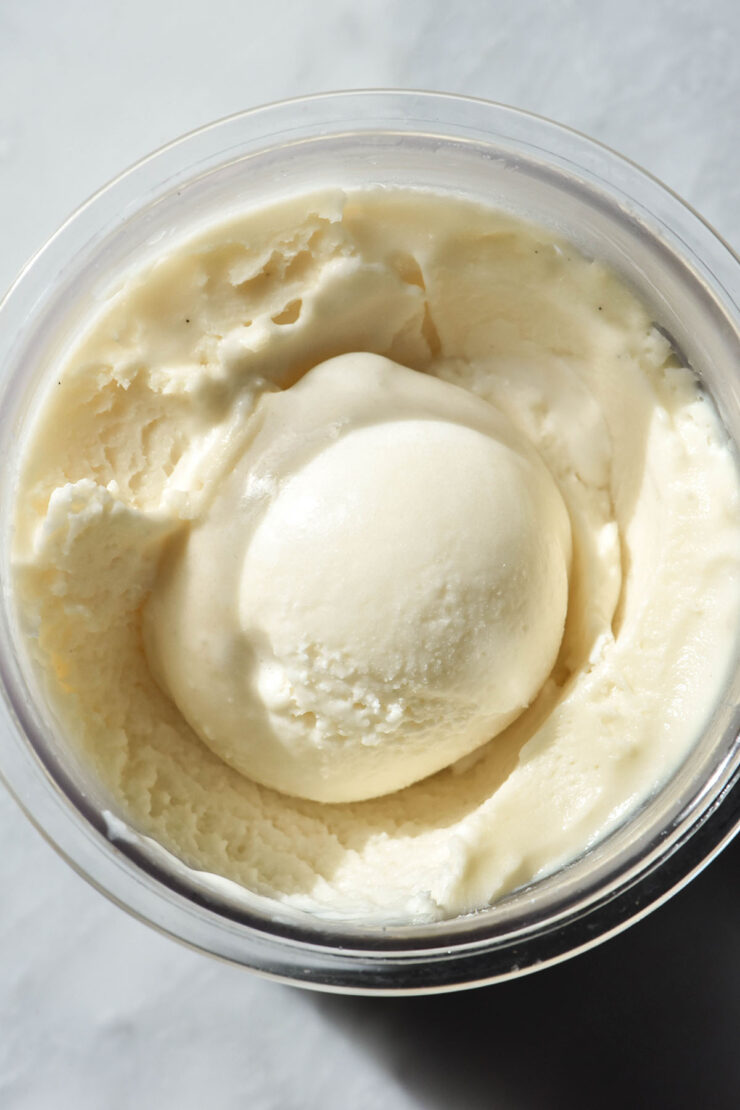
As you might have noticed by now, I love to develop Ninja Creami recipes. Now that I have a good grasp on the function of traditional sugar in Ninja Creami recipes, I wanted to turn my attention to sugar substitutes – namely, allulose. So, let’s get straight into this sugar free vanilla Ninja Creami ice cream recipe. It is the sister recipe to my Ninja Creami vanilla ice cream recipe and the cousin to my vegan vanilla Ninja Creami ice cream.
As discussed, we are using allulose in this recipe. Allulose is a sugar substitute that works well in Ninja Creami recipes because it lowers the freezing point of a mixture in a similar way to sugar.
Before we go any further, a note: although my understanding is that this recipe is suitable for diabetics and ketogenic diets, I make no dietary guarantees here. I am not a doctor or dietician and you should consult with a professional before embarking on any diet. If you are diabetic and taking insulin, it is recommended to check in with a medical professional before substituting sugar as it can cause a drop in blood sugar levels.
Why this recipe works
A few quick notes about the ingredients in this recipe and why they make a great sugar free vanilla ice cream.
You cannot add unlimited allulose without creating a mixture that physically cannot set. So, we have two secret weapons up our sleeve: lactose free thickened cream (full fat, although light does work) and vanilla bean extract.
Even if you are not lactose free, I recommend using lactose free thickened cream if you can. Why? The lactase enzyme converts lactose into galactose which tastes sweet. We are limited by how much allulose we can add to the ice cream, so we’re boosting the sweetness in other ways. The extra bump of sweetness in lactose free cream gives us a bit extra, as does a generous quantity of vanilla bean extract. I find that this combination results in a sugar free vanilla ice cream that sets, is creamy and is perfectly sweet.
If you have a super sweet tooth and this isn’t enough, I would recommend stevia drops. Stevia has no impact on the freezing point of your ice cream, so you can add some extra sweetness without drastically changing the ice cream consistency.
I tested this recipe with xanthan gum and found that, in allulose recipes, it produces a far too chewy end result. This is why the recipe does not use gums. If you want to experiment, I would recommend 1g or less whisked into the allulose before proceeding with the recipe.
Ingredient notes
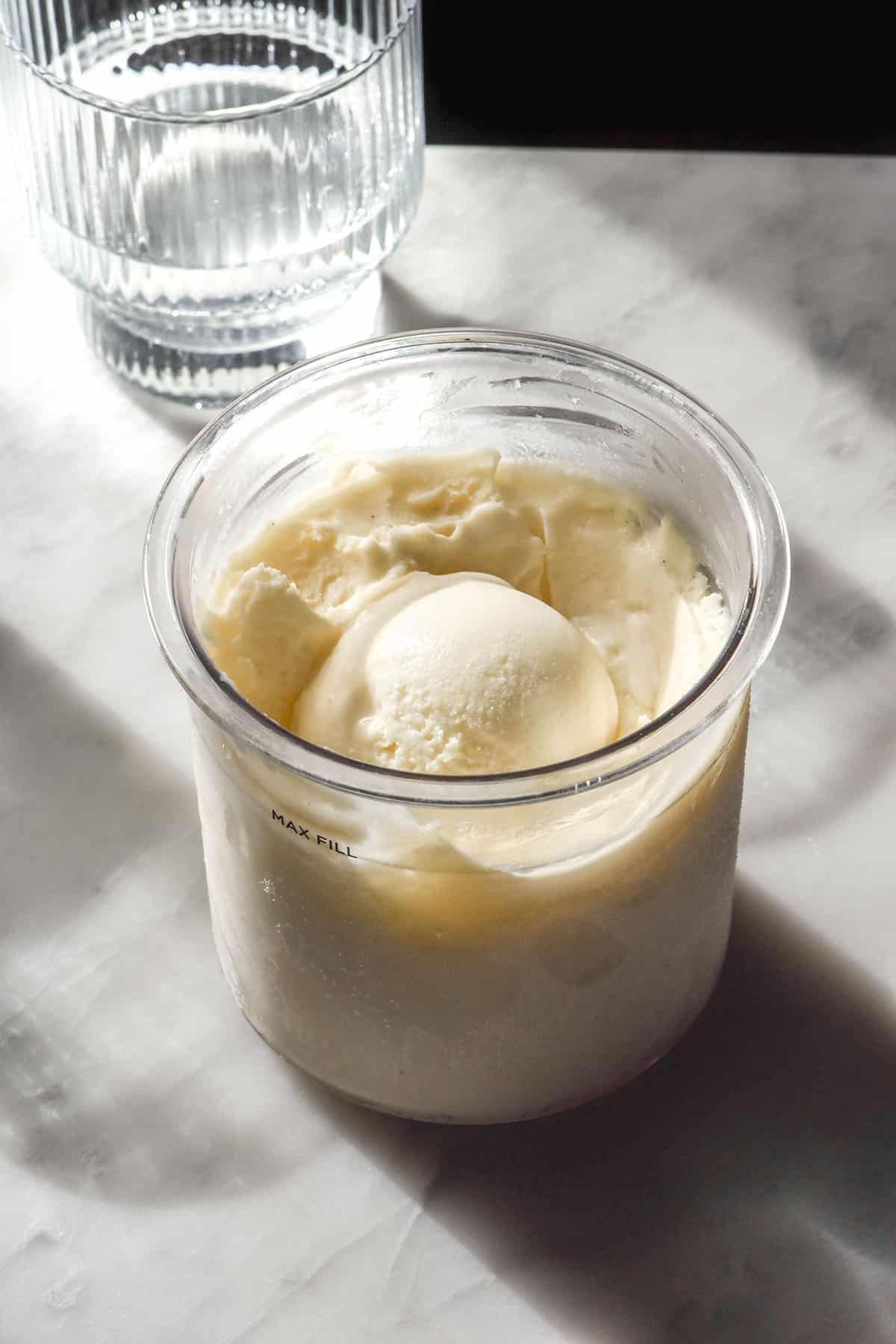
Thickened cream in Australia is generally 35% milk fat. You cannot just use any cream you have lying around as the fat percentage of a Ninja Creami ice cream is important. Too little fat and you may end up with an icy, sorbet style ice cream. Too much fat and the mixture has a tendency to split and become gritty as well coating the roof of your mouth.
Thickened cream might be called heavy cream in the USA. Aim for a milk fat percentage as close to 35% as possible.
In the UK and sometimes in Europe, thickened cream might be called whipping cream. I don’t recommend double cream here as the fat percentage is too high.
This recipe has only been tested with 100% powdered allulose granules – not liquid allulose, not lankanto and not other artifical sweeteners. You are welcome to experiment but I can’t guarantee the result. I have not tested an allulose monkfruit hybrid either.
Onto an important consideration: the vanilla extract. While pure vanilla extract generally contains alcohol and vanilla beans, many supermarket brands in Australia contain sugar. Make sure you read the labels and choose a pure vanilla extract to ensure you are not adding sugar to your ice cream.
Using allulose in Ninja Creami recipes
Allulose performs similarly to sugar in Ninja Creami recipes, I have found (although there are some exceptions). I will note here that I have only worked with powdered allulose in this recipe.
Allulose, like sugar, lowers the freezing point of a Ninja Creami mixture. This means is that if you add too little allulose, the mixture will freeze rock hard. As a result, it will be harder to spin and is more likely to have an icy texture. On the flip side, adding too much allulose will result in a Ninja Creami mixture that will not set. When you go to spin it, it will be more of a milkshake consistency.
Something I noticed while developing my sugar free vanilla ice cream recipe is that allulose seems to have a different effect on the fat content of an ice cream. I found that I could add more cream to a recipe without it splitting or becoming overly fatty. While I need to do more research on this, I did think it was worth mentioning.
Qualities of an allulose based Ninja Creami ice cream
I wanted to include this here because I figure it may help in the event you need to troubleshoot your ice cream.
Firstly, an important note: allulose has limitations. In my testing, I discovered that there is only so much allulose you can add before the mixture just won’t set (same as sugar!). In my experience, 110g pure allulose produces an ice cream that is too soft to serve immediately. This depends a little on buffer ingredients (like strawberries or cocoa) which make it a little more forgiving. Vanilla has no buffer ingredients, so we really need to weigh the allulose and take care not to exceed 100g.
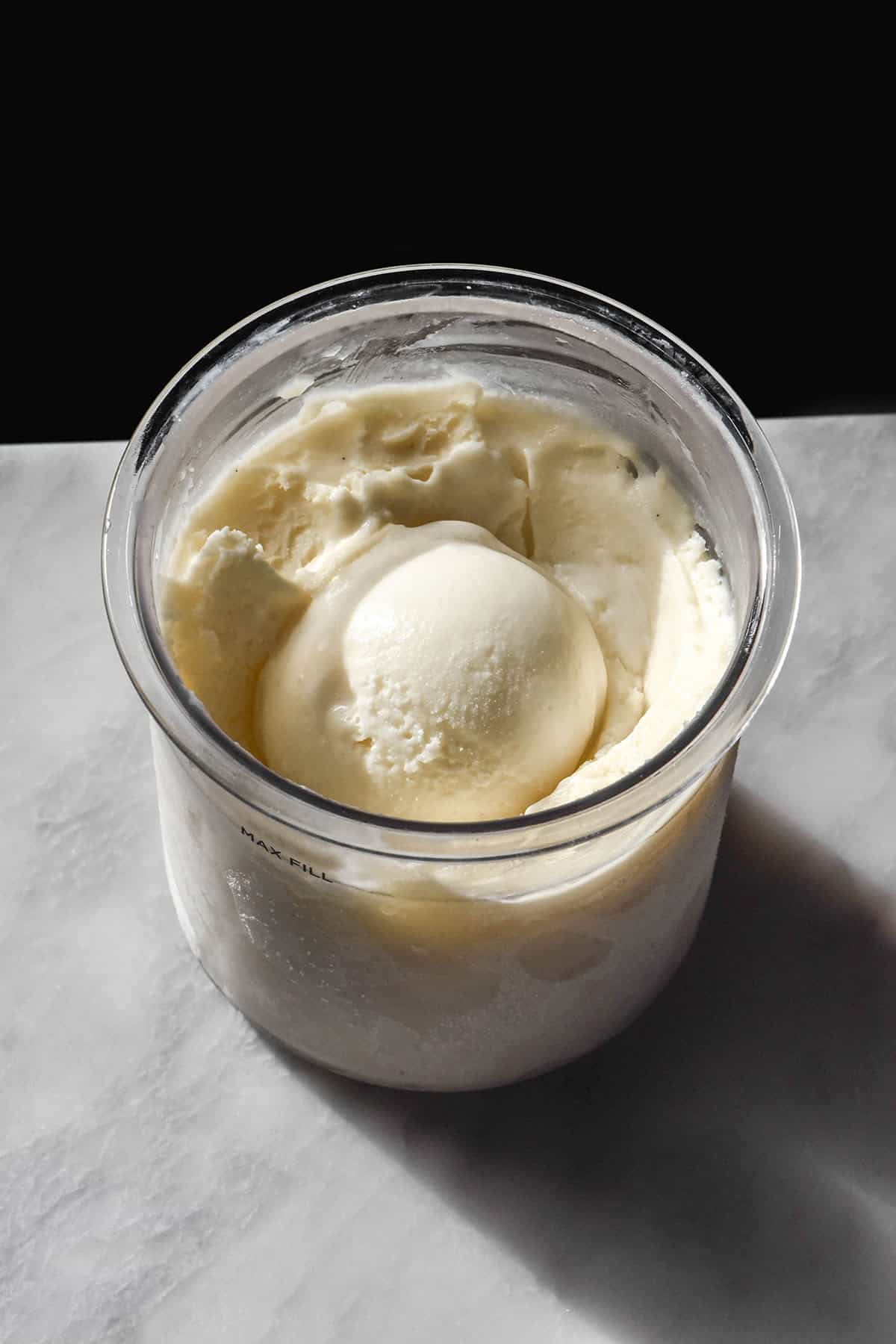
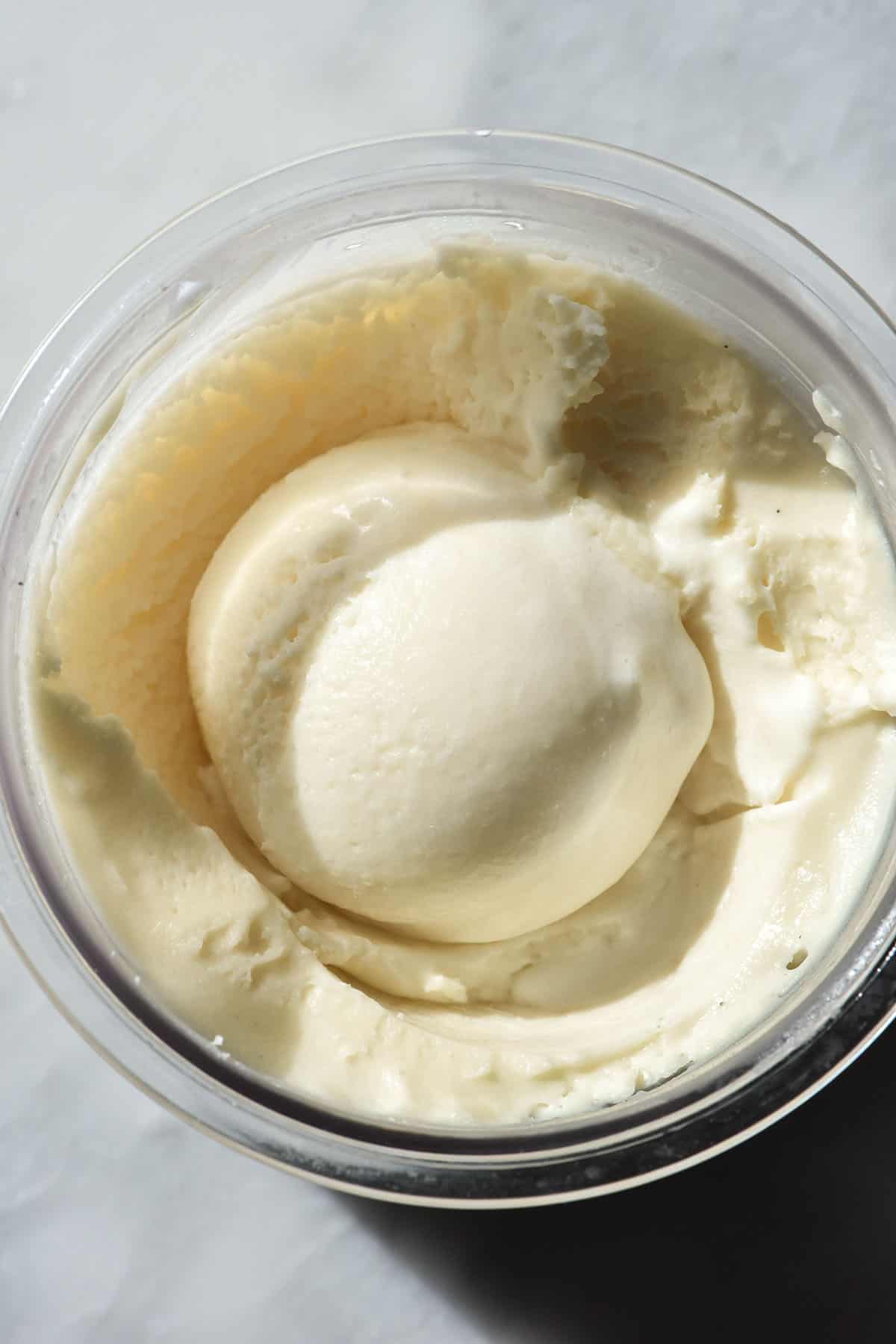
All of my allulose Ninja Creami tests resulted in a softer set ice cream that can be eaten straight from the freezer. They also tend to have a slightly more textured looking appearance when scooping, though the ice cream should have totally smooth mouthfeel.
I have found that allulose Ninja Creami recipes tend to have a bouncier texture than a traditional ice cream as well. Nothing unpleasant, just a subtle springback that a sugar based ice cream doesn’t have.
More sugar free Ninja Creami ice cream recipes
- Sugar free strawberry Ninja Creami ice cream
- Plenty more to come
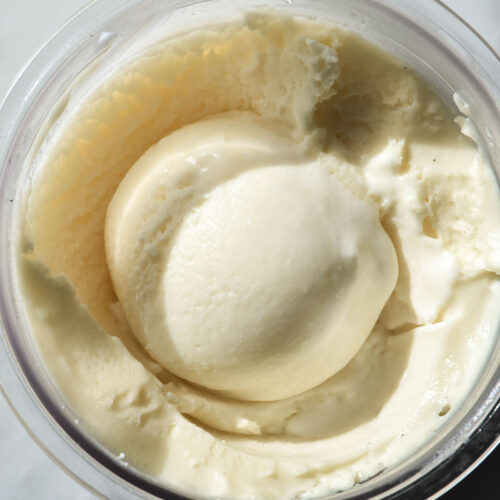
Sugar free vanilla Ninja Creami ice cream
Equipment
- NC300 Ninja Creami machine with 470ml size tubs
Ingredients
- 75-100 g pure powdered allulose see notes in the body of the post before starting
- 275 g full fat lactose free thickened cream 35% milk fat, see notes
- 125-140 g water see notes
- 2 teaspoons pure vanilla extract ensure there is no added sugar
- Small pinch of fine salt
Instructions
- Combine the ingredients in a medium saucepan. Whisk until the allulose dissolves, then use a silicon spatula to stir the mixture over a medium heat for 3 minutes. The allulose should be totally dissolved and the mixture smooth. Set aside to cool before pouring you’re your 470ml Ninja Creami tub and transferring to the freezer with the lid off (this can help minimise a hump forming in the centre which can damage your machine).
- 16-24 hours later when you are ready to eat, process the ice cream using the ice cream function. I find the consistency is perfect after the first spin, but re-spin it if required.
- Store leftovers in the freezer with the lid on.
Notes
- Read the body of the post before starting. Working with allulose is different to working with sugar and there are things you should be aware of. I don’t write the notes for fun!
- I have only tested the powdered, dry form of allulose here. As long as it has the consistency of icing sugar, we’re good. Some brands title this ‘granules’ which feels a bit misleading to me but anyway.
- I have not tested monkfruit, allulose and monkfruit combinations, or any other alternative sweetener. I chose allulose because it depresses the freezing point in a similar way to sugar and because it has the most neutral taste to me.
- You are welcome to try other sweeteners but I have no experience with them and I cannot guarantee any results.
- Don’t use more than 100g allulose in this recipe or it will be a very soft texture. The more allulose you add, the softer the ice cream.
- You don’t have to use lactose free thickened cream, but it adds a boost of sweetness (see notes in the body of the post). We want a thickened cream with about 30-35% fat. This might be called heavy cream or whipping cream where you live.
- I have successfully tested this recipe with light thickened cream (around 18% milk fat). I didn’t enjoy it as much as the full fat version but it does work.
- Make sure you choose pure vanilla extract (which is generally more expensive) if you want to avoid added sugar in cheaper vanilla products.
- If your ice cream is too soft, you have added too much allulose. Cream can vary a little in its natural sugar content and the temperature of your freezer can play a role as well. I find it’s important not to exceed 100g allulose in this recipe, so make sure you have an accurate pair of scales.
- Returning overly soft ice cream to the freezer for at least an hour will generally result in a modest improvement, but allulose based ice cream does stay quite soft even in the freezer.
No Comments